The earliest Muslims in China were traders who came to the south eastern ports as part of the Indian Ocean trade as well as along the Silk Route, an ancient network of routes stretching for over six thousand miles from China across Central Asia to the Middle East and the Mediterranean. Muslims of China are generally divided into two groups: the first group consists of descendants of Arab, Persian, Central Asian, and Mongol traders who married Chinese women and settled in small communities around a central mosque – they are known as the Hui. Culturally and historically diverse, the largest concentration of Hui can be found in northwestern China. The second group consists of Muslims belonging to minority groups whose homelands are located in the territories of the former Soviet Union, such as the Tajiks, the Uzbeks, and Kazakhs. Most of the Muslims are Sunnis with the exception of the Tajiks in Xinjian who follow the Shia interpretation of Islam. Sufism also has a long history in China since the seventeenth century, playing an important role in sustaining Islam through centuries of repression.
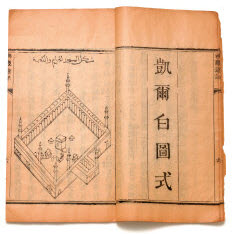
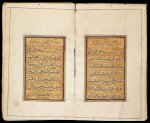
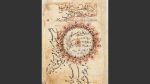
A prominent Hui scholar of Islam, Ma Fuchu (d. 1874), is well-known for his five-volume Chinese translation of the Qur’an and for writing over thirty-five works on metaphysics and history in both Chinese and Arabic. The Chao Jin Tu Ji, in the Aga Khan Museum’s collection, is a travelogue, recounting his pilgrimage from China to Mecca and then to Cairo, where he studied at the Al-Azhar University, subsequently travelling throughout the Ottoman Empire before returning to China. Ma Fuchu left China with a group of Muslim merchants, travelling overland and by riverboat to Rangoon, where he boarded a steamship to take him to the Arabian Peninsula.
Ma Fuchu’s work attests to the several cultural networks that existed between China and the Islamic world.
References:
Aga Khan Museum Online Gallery
Michael Dillion, “Islam in China” The Muslim Almanac, Detroit: Gale Research Inc.,1996
Research by Nimira Dewji
 Be the First to Know – Join Ismailimail
Get breaking news related to the Ismaili Imamat, the world wide Ismaili Muslim community and all their creativity, endeavors and successes.
Inspired? Share the story
Want to inspire? Send your stories to us at Ismailimail@gmail.com
Subscribe and join 20,000 + other individuals – Subscribe now!
Earlier & Related – Nimira Dewji at Ismailimail Archives:
- Mawlana Hazar Imam was gifted manuscripts on architecture of Andalusia, a Knowledge Society of its time
- Mawlana Hazar Imam Designates Ismaili Center Houston as Darkhana for US Jamat, the ninth Darkhana
- Imam Hasan ala dhikrihi’l-salam appointed Sinan as his deputy in Syria
- The arts of the Fatimids, Mawlana Hazar Imam’s ancestors, continue to inspire
- Rumi: “The light that lights the heart is the Light of God”
- Pir Sabzali: “Hearing the farman, their eyes brimmed over with tears of joy”
- Al-Tusi: “The ‘nass’ is not in order to make him an Imam; it is … so that people should recognise him as such”
- Mawlana Hazar Imam Aga Khan V: “The Shia Ismaili Muslim community, of which I am the Imam, has been established in Syria for more than 1,000 years”
- Mughal Emperor Akbar’s pluralism is evidenced by an inscription of Hazrat Isa’s teaching on his “Victory Gate”
- Moment in Time | 1 January 1931 – Ivanow, the pioneer of Ismaili Studies, began to work for Sir Sultan Muhammad Shah Aga Khan III
Imams Series:


Pirs Series:


Islamic Art Series:
Music in Islam Series:

![[Music in Islam] Is listening to music unlawful?](https://ismailimail.fun/wp-content/uploads/2014/08/music-in-islam.jpg?w=150)

Aga Khan Museum Artifacts & Did You Know Series:
Research by Nimira Dewji
 Ismailimail
Reblogged this on Zahra's Blog.
LikeLike