A mammoth undertaking to restore and develop Delhi’s Nizamuddin will end this time next year. How has it transformed one of the most historic and touristy areas of the country?
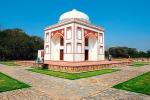
This could be the closest thing to paradise. Here, the world is all grass and birds, air and sky. Sunflowers sway gently in the afternoon breeze. Tiny manicured gardens are laid out one after the other. Stone benches are placed discreetly behind green hedges—just the place for lovers wanting to hide from prying eyes. There are water pools, an amphitheatre and a long water channel with walkways on either side. In the distance, a kite suns itself on the dome of a small monument.
The edifice looks nothing like the typical Delhi ruin—dilapidated, scarred, defaced with “love” graffiti scrawls. The ceilings and walls inside retain their beautiful original patterns, making the centuries-old building look more like its early self.
When I first visited the Sundar Burj about a decade ago, it had the feeling of a very different, very forgettable place. The monument is in the middle of other ignored ruins at the Sundar Nursery, next to the touristy Humayun’s Tomb in central Delhi’s Nizamuddin area.
More at the source: Jul 09 2016 | Mayank Austen Soofi | Livemint
Related




 Ismailimail