“The aim of the Aga Khan Museum will be to offer unique insights and new perspectives into Islamic civilizations and the cultural threads that weave through history binding us all together. My hope is that the Museum will also be a centre of education and of learning, and that it will act as a catalyst for mutual understanding and tolerance.”
– His Highness the Aga Khan

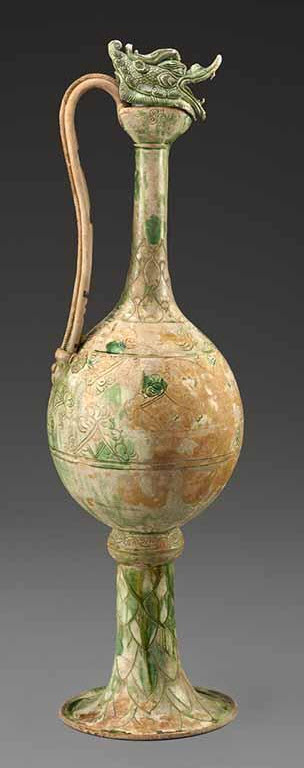
The Aga Khan Museum displays its core collection and also features several temporary exhibitions to reflect the current scholarship and new artistic developments. Among its temporary exhibitions over the past year were:
The Lost Dhow: A Discovery from the Maritime Silk Route – displaying many of the objects comprising the cargo of the Arab shipwreck at the bottom of the Indian Ocean.
A Thirst for Riches: Carpets from the East in Paintings from the West from the permanent collection of the Metropolitan Museum of Art, depicting the history of trade between Europe and the Muslim civilizations.
Home Ground: Contemporary Art from the Barjeel Art Foundation – exhibition from the Barjeel Art Foundation, Sharjah, UAE showing the work of 12 Arab artists who examine how private life is shaped by current political events.
Highlights from Armide – in partnership with Opera Atelier, an exhibition of elements from their internationally-lauded production of Armide. The exhibit showcased the set and costume designs of Canadian Gerard Gauci, including set designs and models, and the title character’s costume.
Artists have performed and inspired audiences through a season-long program that included live performances, classes and workshops, films, panel discussions, lectures, and jam sessions.
Qalandar: Mugham, Dastgah, and Maqam, explored how various tonal systems have been used across Azeri, Persian, and Arabic musical traditions
In collaboration with the Islamic Studies Department, McGill University and with support of Small World Music Society, performances by Fareed Ayaz, Abu Muhammad Qawwal and Brothers, who are masters of Sufi music, inspired the audience.
Nazar-i Tukwaz’s music from Middle East and Turkey to Greece and the Balkans. Nina Pez, Spanish World Music Artist of the year (2009), Kiran Ahluwahlia, Mystic Music of Iran were among the diverse performers.
In the educational field, artist Jamelie Hassan, a writer and independent curator, discussed her work which is represented in numerous public collections in Canada and internationally.
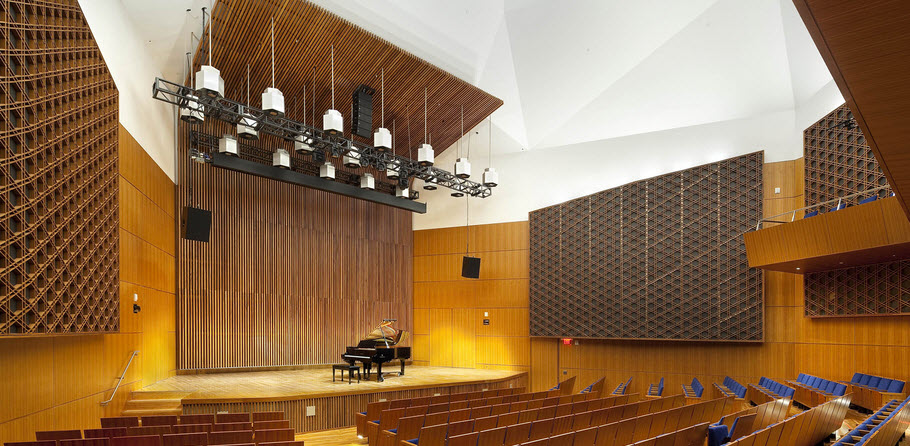
Dr. Glenn Lowry, the Director of the Museum of Modern Art, New York City, and a scholar of Islamic Art, discussed the ways in which contemporary artists have engaged with recent events in the Middle East.
Dr. Michael Barry, professor in Princeton University’s Near Eastern Studies Department, re-imagined a Perisan masterpiece The Canticle of the Birds by Farid ud-Din Attar. An international symposium featuring art historians Sheila Canby (Metropolitan Museum of Art), Gülru Necipoğlu (Harvard University), Martin Kemp (Oxford University), and Amy Landau (Walters Art Museum, Baltimore) raises questions about the meaning of signatures on works of art.
Toronto-based artist Liam Blackburn led a workshop titled Marbling on Paper, which taught basic techniques of the art. A workshop in collaboration with the Ismaili Centre Toronto, focused on hands-on activities for all ages led by Kiya Tabassain and his musicians. A Garden of Ideas workshop was led by Aisha Khalid who is trained in miniature painting.
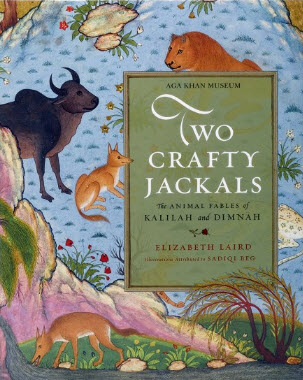
A story-telling program in partnership with the Ismaili Centre Toronto also took place for children and families. Internationally renowned children’s author Elizabeth Laird read from her book Two Crafty Jackals and other stories from Iraq, Iran, and Ethiopia. The Museum offered its inaugural summer camps for youth aged 6 to 8 years, and 9 to 13 years.
Visit the Aga Khan Museum to learn about upcoming exhibitions and events as the Museum aspires to fulfill His Highness the Aga Khan’s vision to be “a centre of education and of learning,” and a “catalyst for mutual understanding and tolerance.”

 Ismailimail