States do not protect minorities because they contribute towards the betterment of the economy, health, education, or art; they do so because they are citizens of the state.
The minorities in Pakistan had and have only one desire – the right to live freely as a citizen of the state. But does the state have the same desire?
– Mustafa Kamal, MS in Government and Public Policy from National Defence University
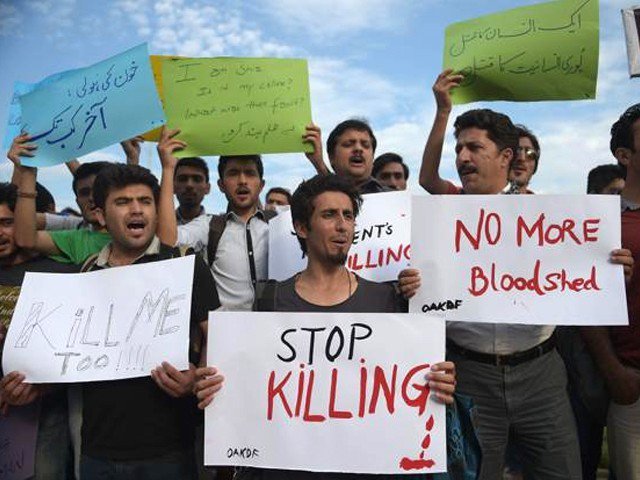
The recent attack on the Ismaili Muslims in Karachi brought a lot of things into perspective. Firstly, it exposed the ineffectiveness of various military, rangers and police operations, and, secondly, it unveiled the dangers our minority communities are exposed to.
But seeing this attack in isolation would not be of any help. We need to understand how religion has facilitated the state and, by extension, the militant organisations over the past decades and how it has led to the conundrum that we find ourselves in now.
The first time Islam came to serve the government was in 1953, for Mumtaz Daultana, which led to the victimisation of Ahmadis. After this, while almost every government took religion’s aid to stay in power, it was during Ziaul Haq’s era that the scope of religion was extended as an agent to fight the American war against Russia. This step essentially led to the establishment of the first international religious jihadi organisation, the Haqqani Network – according to Stanford University.
And the number of jihadi organisations has grown rapidly since then.
According to the South Asian Terrorism Portal, currently in Pakistan, there are 48 domestic, national and transnational militant jihadi organisations operating. This alone shows how fertile the country has become for religious organisations that have devoted themselves to eradicating ‘lesser Muslims’ – like the Twelver Shias, the Bohri Shias, Ismailis, Ahmadis and the Barelvi Muslims.
Countries across the globe chalk out cohesive and well-planned strategies to eradicate radicalisation of any orientation. However, in Pakistan, it is the opposite; here, the state has been reduced to issuing mere condemnations after every brutal killing. And, similarly, it has no power whatsoever to conduct operations against those extremist elements with which it shares cordial relations and considers as ‘strategic assets’.
Ismailis have been targeted previously as well – in Chitral, Gilgit.
In Chitral, many Ismailis were killed during Zia’s regime and Ismaili jamatkhanas (worship places) were set on fire during the same period. A number of Ismailis, who have been killed individually, have never been reported on mainstream media. In Karachi, the Ismaili jamatkhanas have been attacked previously and many Ismailis have fled Karachi due to security reasons from Garden and adjoining areas.
After the Karachi incident, the media in Pakistan stopped mentioning the words ‘Ismaili Muslims’; instead, it carefully adopted the words ‘Ismaili community’ – the Urdu newspapers used the word ‘Ismaili bradari’ – to refer to the minority. The news analysis projected the philanthropic work of Ismailis and their imam, and asked the government to protect “a community that is economically contributing for the betterment of the country”.
One wonders if “contributing economically” is the reason for the state to protect its citizens or is it the nature of the social contract that a citizen has with the state under which the government is solely responsible for the protection of its citizens. That still needs to be answered.
States do not protect minorities because they contribute towards the betterment of the economy, health, education, or art; they do so because they are citizens of the state.
Read the complete story via The Express Tribune | Is Pakistan capable of protecting its minorities?
By Mustafa Kamal Published: May 24, 2015
The author has done his MS in government and public policy from National Defence University. He is a social activist, hailing from Gilgit Baltistan and currently studying at Aga Khan University, London
Earlier & Related
 Canada’s Prime Minister Stephen Harper marks successful visit by His Highness the Aga Khan - “It was an honour to once again welcome His Highness the Aga Khan to Canada…
 The Express Tribune | Is Pakistan capable of protecting its minorities? - States do not protect minorities because they contribute towards the betterment of the economy, health,…
 The News International | Pakistan of the Ismailis - The past is another country, and 1906 is located at a distance of more than…
Click this link or the image below for all posts on this topic
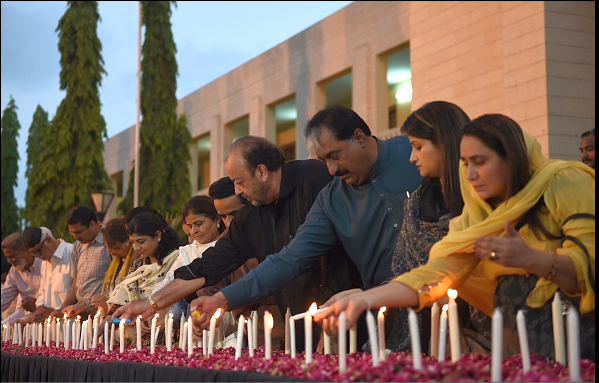
“This attack represents a senseless act of violence against a peaceful community, My thoughts and prayers are with the victims and the families of those killed and wounded in the attack.”
– His Highness Prince Karim Aga Khan
 Ismailimail
Whenever there is any news about Ismailis of Pakistan, the writers always refer Ismailis as minority. We are not minority like Hindus, Christians, Ahmedis. Minorities are those who are not Muslims. We are Muslims. So please do not call Ismailis as minorities.
LikeLike