Evolving alongside the rival powers of Delhi’s earliest rulers, Purana Qila exists as a window into the true – and the mythical – histories of India’s capital city.
Delhi’s history is often spoken of in terms of its seven cities. The sixth Delhi is the Purana Qila, or Old Fort, a 16th-century stone fort near the eastern edge of the city.
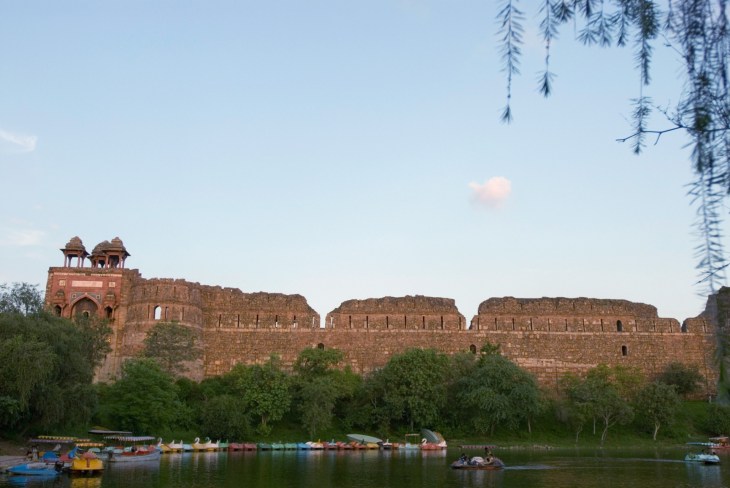
here are monuments in Delhi older than the Qila – and there are certainly more impressive ones. But it’s unlikely there exists another place in the city where history runs as deep. Excavations in the fort show the area was inhabited in five preceding Delhis, and even earlier, reportedly back to 300 BC. Some also believe that somewhere under the Qila are the remains of a legendary city that’s a civilisational navel of sorts.
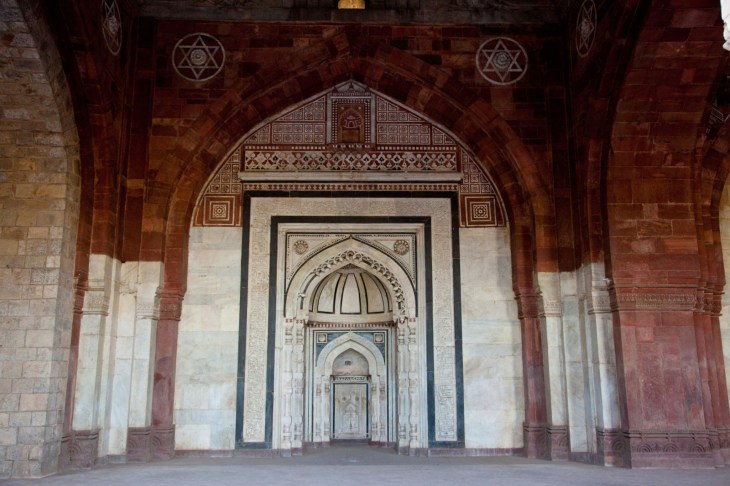
The walls of the Qila, and the few structures within – a stepwell, a squat tower used as a library-cum-observatory, and a fine mosque – are attributed to the Mughal emperor Humayun and the Afghan Sher Shah Suri (‘The Lion King’), rivals who ruled Delhi in the mid-16th century. Humayun’s construction began in 1533, but was deposed after a few years by Sher Shah. Humayun recaptured the fort 15 years later, but soon after tripped down the stairs of the library and died. A Mughal chronicler from the time mentions that Humayun’s fort was built on the hallowed site of Indraprastha, a story that sits in the shimmering realm between myth and history.
Discover, Explore and Learn more at:
The Guardian | Delhi’s 16th-century Purana Qila fort – a history of cities in 50 buildings, day 4
In 2004, on the occasion of the 9th cycle of the Aga Khan Award for Architecture (AKAA), Humayun’s Tomb Gardens Complex was the venue of the Awards presentation ceremonies – an area in close vicinity of the Purana Qila.
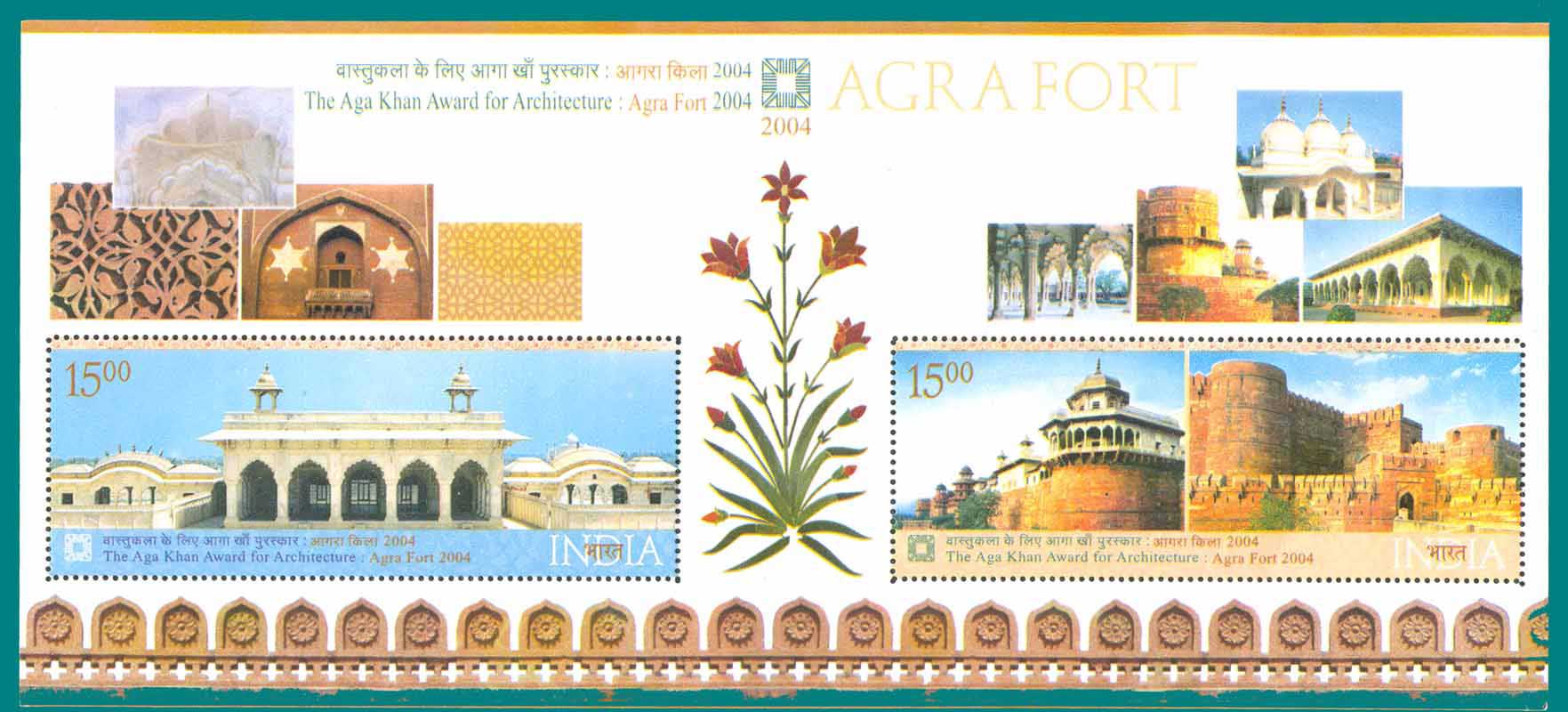
As with all AKAA hosting countries, commemorative stamps are issued to mark the occasion. The stamps issued by the government of India captures the architectural details of Agra Fort – a sister fort to Purana Qila.
Since 2000, Aga Khan Trust for Culture (AKTC) in collaboration with the Archaeological Survey of India (ASI) and other partners have undertaken the restoration of Emperor Humayun’s Tomb & Garden complex, one of the 23 World Heritage Sites in India. The expanded project now encompasses Nizamuddin Basti and the Sunder Nursery, an area that includes Purana Qila.
Earlier & Related about Delhi from the Ismailimail Archives:

 Be the First to Know – Join Ismailimail
Get breaking news related to the Ismaili Imamat, the world wide Ismaili Muslim community and all their creativity, endeavors and successes.
Inspired? Share the story
Want to inspire? Send your stories to us at Ismailimail@gmail.com
Subscribe and join 21,000 + other individuals – Subscribe now!
Earlier & Related about The Guardian – History of cities in 50 buildings
 The Guardian | History of cities in 50 buildings, day 5 – Timbuktu’s Djinguereber mosque - Constructed from the very earth on which it stands, Timbuktu’s oldest mosque is at the…
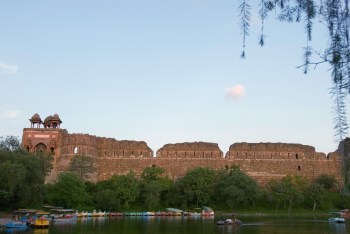 The Guardian | History of cities in 50 buildings, day 4 – Delhi’s 16th-century Purana Qila fort - Evolving alongside the rival powers of Delhi’s earliest rulers, Purana Qila exists as a window…
 The Guardian | History of cities in 50 buildings, day 7 – Timur’s Registan: noblest public square in the world? - The influence of this ancient Uzbek grand square stretches far across the world’s cities, from…
 The Guardian | History of cities in 50 buildings, day 2 – Citadel of Aleppo - In the oldest city in the world, Aleppo’s historic citadel offers a poignant and ongoing…
 Ismailimail