
Image:Metropolitan Museum of Art
Islam came to Africa very early in its history. When its followers faced persecution in Arabia, the Prophet advised the community to seek refuge in Abyssinia (modern day Ethiopia). In due course, the presence of Muslims in Africa grew and extended as scholars and merchants exchanged their material and intellectual wares with the peoples of Africa. Islam spread to West Africa along the ancient trading route that linked Egypt to the West African empire of Ghana which flourished from the eighth century onwards. Muslim traders and scholars thus became the early transmitters of Islamic culture and faith to the region.
In the mid-thirteenth century, the state of Mali was founded by the legendary Sunjata Kaita. His successors were known by the title mansa; the most famous of these rulers was Mansa Musa (d. 1327). During his reign, Musa invited the finest scholars, artists, and poets from all over the world to live in the city of Timbuktu. As a result of the empire’s wealth and support for learning, the Mali Empire became one of the most powerful empires.
By the late fourteenth century, the Mali Empire weakened and was absorbed into the expanding kingdom of Songhay, which was founded as a small state centred on the ancient city of Gao in circa 700 in West Africa. The empire eventually extended to the coast of the Atlantic Ocean, and east into present-day Nigeria and Burkina Faso.
From the early fifteenth to the late sixteenth century, with several thousand cultures under its control, the Songhay Empire was considered one of the greatest African empires, stretching all the way to present-day Cameroon.
During this period of the spread of Islam in West Africa, the region became part of the larger cosmopolitan world of Muslim culture and civilization in North Africa and the Mediterranean, linked by faith and trade. Ibn Battuta, who travelled in the region, visiting Mali in 1352, noted the presence of mosques, institutions of learning, and the widespread tradition of Muslim practices and education among the inhabitants he encountered.
The Great Mosque, one of Mali’s oldest monuments and a major landmark, and the Djingereyber Mosque were restored by the Aga Khan Trust for Culture.”The Aga Khan Development Network’s activities in Mali date back to 2003. Since that time, activities have grown to encompass cultural restoration and social development projects in Bamako, Mopti, Timbuktu and Djenné, as well as economic development projects. These range from investments in the aviation infrastructure to water, electricity and packaging for agricultural products. Since 2008, Aga Khan Foundation has been implementing the Mopti Coordinated Area Development Programme, which combines interventions in health, education, rural development, financial services and strengthening of civil society to improve the quality of life for the people of the Mopti Region.”*
References:
Nyang, Sulayman. “Islam in Sub-Sahara Africa.” The Muslim Almanac ed. by Azim A. Nanji. Detroit, Gale Research Inc. 1996
Aga Khan Trust for Culture Historic Cities Programme
*AKDN in Mali
Research by Nimira Dewji
 Be the First to Know – Join Ismailimail
Get breaking news related to the Ismaili Imamat, the world wide Ismaili Muslim community and all their creativity, endeavors and successes.
Inspired? Share the story
Want to inspire? Send your stories to us at Ismailimail@gmail.com
Subscribe and join 20,000 + other individuals – Subscribe now!
Earlier & Related from the Ismailimail Archives
 Mawlana Hazar Imam was gifted manuscripts on architecture of Andalusia, a Knowledge Society of its time - The fundamental reason for the pre-eminence of Islamic civilisations lay neither in accidents of history…
 Mawlana Hazar Imam Designates Ismaili Center Houston as Darkhana for US Jamat, the ninth Darkhana - (the light is lit) in houses of worship which God has allowed to be raised,…
 Imam Hasan ala dhikrihi’l-salam appointed Sinan as his deputy in Syria - Rashid al-Din Sinan, the greatest of the medieval Nizari Ismaili da’is in Syria, was born into a…
 The arts of the Fatimids, Mawlana Hazar Imam’s ancestors, continue to inspire - The official logo for Hazar Imam’s visits comprises the word nur, Arabic for light, repeated…
 Rumi: “The light that lights the heart is the Light of God” - Didar – A Persian word meaning ‘seeing” or “vision.” The vision can be experienced both…
 Pir Sabzali: “Hearing the farman, their eyes brimmed over with tears of joy” - After the fall of the Nizari Ismaili state of Alamut to the Mongols in 1256,… Al-Tusi: “The ‘nass’ is not in order to make him an Imam; it is … so that people should recognise him as such” - “O Messenger, deliver [to the people] what has been revealed to you from your Lord,…
 Mawlana Hazar Imam Aga Khan V: “The Shia Ismaili Muslim community, of which I am the Imam, has been established in Syria for more than 1,000 years” - At the European Commission’s ninth annual conference in support of Syria, held on 17 March…
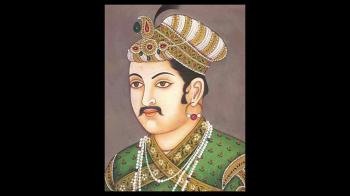 Mughal Emperor Akbar’s pluralism is evidenced by an inscription of Hazrat Isa’s teaching on his “Victory Gate” - From the word ‘Mongol,’ the Mughals were a Muslim dynasty of Turkic-Mongol origin that ruled…
 Moment in Time | 1 January 1931 – Ivanow, the pioneer of Ismaili Studies, began to work for Sir Sultan Muhammad Shah Aga Khan III - Born in St Petersburg, Russia, on 3 November 1886, Wladimir Ivanow (spelt variously Ivanov and…
 Ismailimail