Instead of just acquiring it from the ‘dominant’ ones, we should conduct our own researches keeping in view the different value systems of our cultures.
– Dr Marfo, Founding Director, Aga Khan University – Institute for Human Development (AKU-IHD)
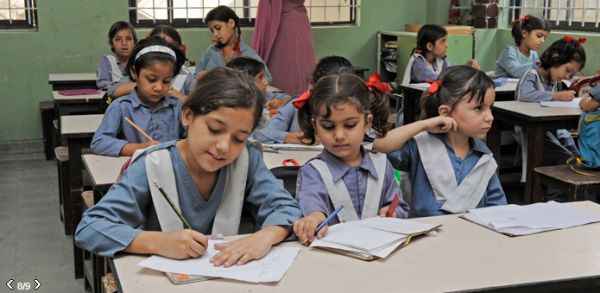
By Minerwa Tahir for The Express Tribune. Published October 25th, 2014.
Dr Marfo, the founding director of Aga Khan University Institute for Human Development, was giving a presentation on ‘Advancing a Global Developmental Science: The Role of a Majority World Research Institute’ at the varsity’s auditorium. Global development science is not a matter of methods, techniques or procedures of a research. In fact, it is the epistemological and paradigmatic consideration of worldviews that makes research qualify for diversity, he said.
He outlined a problem with modern science which he calls ‘hegemonic thinking’. Even though North America comprises only five per cent of the total world population, a large majority of the world imparts education in light of the research conducted in that part of the world, he pointed. This attitude has a flaw, he felt. Euro-American researches cannot be applied in the context of the larger world because they have a limited sample.
Dr Marfo shared a research analysis undertaken by Gosling et al (2004) during his presentation. The samples drawn for the researches that Gosling et al analysed were quite limited in nature. “Eighty per cent of the subjects were white and the mean age was 22.9 years,” said Marlo, quoting the analysis. This raises questions on how the research can be generalised and whether or not it can be part of global development science.
According to Dr Marfo, representative research is what is necessary to advance in a global science that has human development at its core. There are two ways to tackle the question of global science, he said. “Representativeness can be increased by diversifying samples or by taking into consideration the various worldviews.”
Elaborating on the idea of worldviews, he stressed on the fact that there are different value systems across the world. “Openness to different idea systems is a prerequisite to the attainment of a global development science,” he said.
Problem-solving is context-bound and context is historically situated and culture-imbued, said Dr Marfo. “What is knowledge?” he asked. “Conceptions of the world are knowledge. Many years ago, we used to blame all sickness on wizards and witches. Then we were familiarised with the concept of a germ.”
He went on to talk about how in the United States, the middle-class has become a yardstick against which every person must evaluate themselves. “When you talk about childrearing, the middle-class parents are good parents and the rest usually need to be ‘fixed’,” he said. In short, he was of the view that no certain values should be considered better than others just like no two people, when compared, should be considered better or worse than the other.
Dr Marfo said that the education systems in most parts of the world, such as in Pakistan, attempt to emulate Euro-American cultures. He was unhappy with the ‘hegemonic’ trend and wants it to be replaced by more pluralistic approaches.
“The consequences of such attitudes are that ethno-theories within a majority world local context are considered lesser than the dominant ethno-theories within Euro-American world contexts,” he said. He further said that the ‘dominant’ theories are presumed necessary for optimal development.
“We, as educated beings, must redesign our systems,” he said. “Often we think that why should we worry about conducting a research that somebody else has already done. However, while thinking so, we often ignore that the research was conducted in the background of a totally different value system.”
Aga Khan University – Institute for Human Development: http://www.aku.edu/ihd/Pages/home.aspx
Brief Profile: Dr Kofi Marfo, Founding Director of the Institute for Human Development, Aga Khan University
About The Aga Khan University Institute for Human Development (AKU-IHD)
“Understanding and supporting the development of people in the day-to-day contexts in which they live and experience their multiple worlds are fundamental to any society’s hope of attaining a high quality of life and well-being for its citizens. The Institute for Human Development (IHD) is dedicated to the pursuit of knowledge with direct relevance for policies, programs, and practices that enhance life experiences at all stages of human development. In its foundational years, the Institute seeks particularly to become a major instrumental agent, locally as well as globally, for advancing knowledge about the earliest years of children’s development and harnessing such knowledge for the purposes of shaping policies and interventions that ensure a strong start in life for all children wherever they may live.”
– Dr Marfo, Founding Director, Aga Khan University – Institute for Human Development (AKU-IHD)
“The Aga Khan University Institute for Human Development brings together researchers, teachers, practitioners and students from across the university and the entire Aga Khan Development Network, linking with partners in other parts of the world. Their collective focus on early child development represents both a unifying theme at the heart of the university and the network, and one of the areas most critical to the future of the communities we serve.”
– Dr Greg Moran, Aga Khan University – Provost
 Be the First to Know – Join Ismailimail
Get breaking news related to the Ismaili Imamat, the Noorani Family, the world wide Ismaili Jamat and all their endeavors and successes.
Learn how to subscribe and join 16,000 + other amazing people – Subscribe now!
Recently Featured at Ismailimail:
Click on individual pictures to browse all related posts.










 Ismailimail
“”THE ANCIENT TOWN OF ZHOUZHUANG” DOCUMENTARY WON ONU PRIZE ” residential houses built in the Ming and Qing dynasties, the town is like a paradise surrounded by modern urban civilization
translate in ten languages by Centre of International Cultural Exchange, under directly Ministry of Culture P.R.China
second photo TIBET in Public school in Rome for increased education to respect diversity
Rosa Dalmiglio
intercultural and interfaith operator between East and West
Date: Sat, 8 Nov 2014 03:44:35 +0000
To: rdalmiglio@hotmail.com
LikeLike
Dr Kofi Margo has enlightened us a lot. We should be gathering data from samples covering various cultures and various peoples. It is indeed wrong to draw judgement on only American or Euro American samples only. We can understand the problems and facts of our world better taking diverse samples throughout our world.
LikeLike