 Farhan Jumani is an educator, scholar. He is a freelance writer for many platforms such as Daily Dawn, Pamirtimes, The Financial Express and The Daily Star Bangladesh. He has background in anthropology and religious studies and regularly speaks to different audiences ranging from students to policy makers.
Farhan is contributing this speech analysis and personal reflections on the features of the historic joint session of His Highness the Aga Khan delivered in the Canadian parliament. This analysis will help people understand the messages within the speech and above all how one shares the Islamic perspectives in the West who are not familiar with the cultures and diversities of Islam.
AGA KHAN HISTORIC ADDRESS TO CANADIAN PARLIAMENT – ITS MAIN FEATURES.
On 23rd Feb 2014, The Canadian citizens were in an unusual situation, the noisy and bustling city was suddenly quiet, yet the Canadian citizens were excited and gathered around television in form of cluster. For special event on that day, the final hockey match between Canada and Sweden at the Bolshoy Ice Palace in Sochi was the reason of this excitement of the Canadian people.
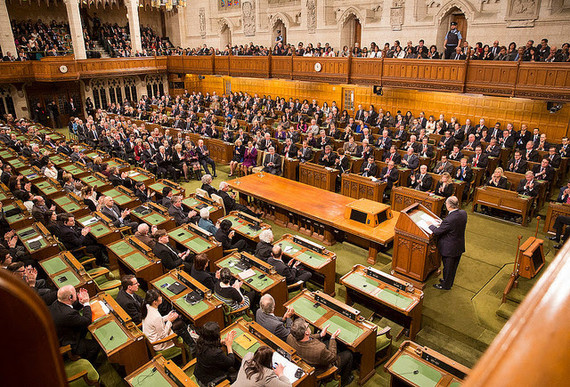
After four days on 27th Feb, 2014 again in the very cold day this time not only Canadian citizens, but around the world people were excited especially the Ismaili community around the world to view and hear the historic address of His Highness Prince Karim Aga Khan to the Canadian parliament. Not only the Ismaili community of Canada in-fact Bangladesh, Pakistan, India and around the world, members of Ismaili community was listening online and on television to the speech of their spiritual leader His Highness the Aga Khan and also the head of worlds largest private, international development agencies.
One might think why this joint session is historic and what had drawn people to watch the event online around the world. This is first time in the history of Canadian parliament a faith leader and third time a non- sitting head of state has addressed the both houses of Canadian parliament. This trend of inviting people for a joint-session address has been started from 1939 onward. The first such address was delivered by His Majesty King George-IV and for last 75 years, it is continuous. When Aga Khan delivered his talk on this 27th Feb 2014, he became the fifth Muslim who delivered such an address. Before him there are four Muslims had delivered such address to the Canadian parliament including the first Prime Minister of Pakistan Sahibzada Liaquat Ali Khan in 1950, Besides Dr. Sukarno of Indonesia, King Hussein Ibn Talal from Jordan and Hamid Karzai from Afghanistan are also got the chance of delivering such addresses.
Aga Khan began his address by thanking Prime Minister for the generous introduction and then congratulated Canadians for wining the winter Olympics in Sochi and than begin with a light hearted joke he said being a honorary citizen of Canada and as ex-player himself he wished to join the team with the another Buddhist faith leader Dalai Lama the another honorary citizen of Canada for a formidable defense.
Surely, there is a hidden learning’s behind this part and that is to behave generously with others the real Islamic value and to keep update yourselves in this technological age with world affairs and others matters. In each and every line of speech, one can find a unique guidance but here in a limited word space. The writer is sharing the self perceptions from the speech.
Than Aga Khan began with the background of his role and responsibilities and proposed to discuss about the Ummah the entire Muslim community around the world. Aga Khan described his position as a supra-national entity means being superior and not limited to any particular nation. It is not a political authority and govern no land. It has spiritual role and responsibilities, Further, His Highness describe about the history of that position in the broaden context of Sunni and Shia Interpretations of the Muslim Faith.
As we know that in Sunni interpretation there can be more than one Imam in a given time and place and in contemporaries believes that Prophet (P.B.U.H) nominated his cousin and son in law as a rightful authority but with the time Shia’s also divided into the question of rightful authority and than only one community in Islam historically remained with a living hereditary Imam who guide the followers in the material and spiritual matters in order to improve the quality of life of the followers, but also the broader societies in which they live, regardless of faith and ethnicity.
Then, His Highness said, “Islam believes fundamentally that the spiritual and material worlds are inextricably connected. Faith does not remove Muslims — or their Imams — from daily, practical matters in family life, in business, in community affairs.”
Much of these works has been done with the presence of AKDN network in many countries. The AKDN is active in the field of education, job creation, healthcare and economic development of developing countries like Bangladesh, Pakistan, Africa, India, Afghanistan, Tajikistan and many more.
Aga Khan also commented on the longstanding relationship of Ismaili Imamate and Canadian government partnership in many projects and hope for more strengthen relationship between Canadian government and AKDN for a fundamental objective of improving the quality of life of the people. This is one of the common aspirations shared by human race. As per the UNDP survey of 18th South American states, “the majority of the people were less interested in their forms of government, than in the quality of their lives. Even autocratic governments that improved their quality of life would be more acceptable for most of those polled than ineffective democratic governments.”
Than Aga Khan appreciated the role of Canadian government for its global efforts to change this picture, “Canada is an exemplary leader.” Than the light shed on the quarter century of close collaboration between AKDN and Canada. And also thank Canadian institutions for sharing their best practices which also inspired AKDN to work on same road. In fact, His Highness also happily recall the day when they signed the delegation with Canada to foster peace, prosperity, and equality through pluralism.
Than Aga Khan moved to the international issue the role of relations between the countries and cultures of Islam means the Muslim Ummah and non Islamic society. It is a serious issue of our time. Aga Khan emphasize on the diversity of Ummah which is often ignore. Another point which was added the Muslim community expanded dramatically in recent years, and have very differ views on many questions. They also don’t share the common impressions of West. Therefore, for some it is very common point to talk about the unavoidable conflict of the industrial West and Islamic society. “But Muslims don’t see things in this way. Those whose words and deeds feed into that point of view are a small and extreme minority. For most of us, it is simply not true. We find singularly little in our theological interpretations that would clash with the other Abrahamic faiths — with Christianity and Judaism. Indeed, there is much that is in profound harmony.” The Shia Imam further suggest the only ethic to make the world safe for democracy and above all to live that is pluralism a value needed to be practice in its spirit. This value became a mantra for the Global centre of pluralism a joint initiate of Ismaili Imamate and the Government of Canada.
This is one of the values, which unite many Muslim societies historically. His Highness argued and further emphasis that it was a matter of state policy to pursue excellence through pluralism. As per His Highness, it was a basic principle formalized in Muslim dynasties from the time of Abbasids, Ottomons, Fatimids, and the Mughals. The pluralism mutual respect of each other was a part of state policy. It was not only within the Islamic society they also welcoming Christians and Jewish people as well. The results of those pursuits were the shine in the arts, in literature, in intellectual traditions and in great civilizations.
Today, these Islamic traditions have been obscured in many places, from Muslims and non-Muslims alike. The work of the Aga Khan Trust for Culture, including the Aga Khan Award for Architecture and our Historic Cities Programme, is to revive the memory of this inclusive inheritance. Another immediate initiative is the Aga Khan Museum which will open this year in Toronto, an important testimonial in a Canadian setting to the immense diversity of Islamic cultures. Said by His Highness. Further, requested to hear the voice of Muslim people because these internal conflicts of Muslims are on serious state especially around nine Muslim countries quoted by him i.e. Pakistan and Malaysia, Iraq and Syria, , in Lebanon and Bahrain, in Yemen and Somalia and Afghanistan. Therefore, it is a dire time to contribute for promoting peace, harmony and above all the pluralistic outlooks should be honored in every aspect of lives including faith.
Then in the end very generously His Highness thanks the prime minister for providing this opportunity to share from the faith perspective, than just as he began the speech with the name of almighty God. His Highness ended the speech with the translation of the Holy verse which is center to his life which praise the universal humanity: “O Mankind, fear your Lord, who created you of a single soul, and from it created its mate, and from the pair of them scattered abroad many men and women…” On this Aga Khan beautifully added that he knows of “no more beautiful expression about the unity of our human race — born indeed from a single soul. This is one of the beautiful messages delivered to all the people of the world regardless of their ethnicity and faith to create the world safer for diversity.
The writer is specialized in religious education: farhanjumani@gmail.com
Earlier by Farhan Jumani:
Farhan Jumani: Online avenues of knowledge
Article Farhan jumani: Pastoral care in schools: A helpful, sharing method to educate

 Ismailimail