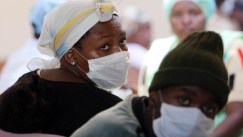
 Health activists in the United States and South Africa are crying foul about a drug that was tested in South Africa, Zambia, Botswana and Zimbabwe, despite it not being registered in any of those countries and therefore not available to patients other than those involved in the clinical trial.
They also say that the drug, rifapentine, is far too expensive. Although there is no South African price for the drug, it is currently $1.60 a tablet in the United States, compared with five US cents a tablet for isoniazid, a drug currently used in tuberculosis regimens.
Although rifapentine has been used to treat selected American TB patients for years, it is largely unavailable outside of the US. This is partly owing to its high cost and partly as a result of little research having been done on the drug. Previous trials involving rifapentine have been disappointing, sporting high TB relapse rates and high rates of resistance in patients living with HIV.
But the results of a new study that were released earlier this year that stemmed from trials in different parts of Southern Africa showed that using rifapentine in conjunction with another up–and–coming TB drug, moxifloxacin, was just as effective as using isoniazid or rifampicin, the currently used drugs. The results were positive even in patients with HIV.
Notably, patients involved in the rifapentine arm of the trial only had to take the drugs once weekly, as opposed to twice daily as in current regimens.
“If you think about a bus driver [on TB medicine], he only has to come in once a week for directly observed therapy [with rifapentine],” says Amina Jindani of the St George\’s Medical School at the University of London, a lead researcher in the study. “That\’s a huge advantage. It has enormous potential.”
via Anger over drug access in TB trial | News | Health | Mail & Guardian.
 Name: Amina Jindani, MD, FRCP
Position: Honorary senior lecturer
Research centre: Infection and Immunity
Division: Clinical Sciences
Research interests
Tuberculosis, clinical trials.
http://www.sgul.ac.uk/research/researchers/g-k/amina-jindani

 Ismailimail