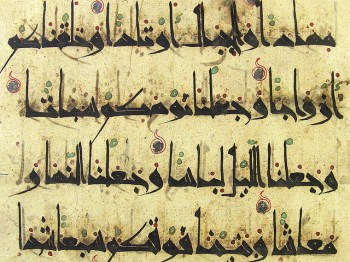
 The Institute of Ismaili Studies, London 2–4 September 2013
This colloquium seeks to examine the plurality of approaches to the Qur’an in contemporary Iran. By bringing together specialists in early modern and contemporary Iran from various disciplines, ranging from the social sciences to Qur’anic studies, the colloquium draws as comprehensive as possible a picture of the various approaches to the Qur’an that have been adopted in Iran over the past 150 years. It spans the second half of the nineteenth century, when the intellectual drive that would breed the constitutional uprising was at its height, and the first decade of the twenty-first century, the period in which Iran has become one of the key arenas of religious, intellectual, political and social debate.
The Qur’an is a central reference for various levels of public discourse in Iran.As the founding scripture of Islam, it inevitably influences the expression of all aspects of Muslim life – religious, cultural and social. Its interpretation, in the form of tafsir as well as in other non-codified fashions, informs each denomination’s religious practice, establishes the boundaries of religious identity and shapes the character of each individual’s relationship with the divine and with society.
PROGRAMME – ABSTRACTS – BIOGRAPHIES
via The Institute of Ismaili Studies – Approaches to the Qur’an in Contemporary Iran.

 Ismailimail