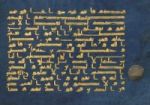
 The Qur’an is a central reference for various levels of public discourse in Iran. As the founding scripture of Islam, it influences the expression of all aspects of the life of Muslims, be it religious, cultural or social. Its interpretation, in the form of tafsir or in other genres and fields, establishes the boundaries of religious identity of each denomination; informs its religious outlook and practice; and shapes the character of each individual’s relationship with the divine and within society.
In Iran, where the majority of the population adheres to Twelver Shi‘ism, the relationship between the Qur’an and society is charged with a set of peculiarities that have not been investigated comprehensively and in detail by specialists in Iranian or Qur’anic studies. For example, until recently, the Qur’an was given relatively less attention in the Twelver Shi‘i institutions of religious learning than in most Sunni madrasas.
On the other hand, the Qur’an has had an impact on many areas of Iranian society and culture: its script has been creatively seen as inspiration for the arts; its meaning has been employed by rival factions in political discourse; its depths have been explored by the mystics of every persuasion and its symbols have never ceased to permeate and influence, by devotion or by reaction, almost every kind of literary expression in the Persian language.
The Institute of Ismaili Studies – Approaches to the Qur’an in Contemporary Iran: Description.

 Ismailimail