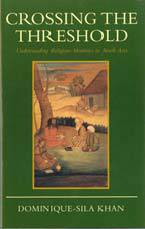
 via Institute of Ismaili Studies
The question ‘Who is Hindu, who is Muslim?’ and how they came to be defined as such is explored in this book. By analysing documents as well as field data, the author demonstrates how the answer to this question is complex and nuanced. She argues that the perception of Islam and Hinduism as two monolithic and antagonistic faiths is so deeply ingrained that the complexity of their historical development and the convergence of their shared cultural heritage and lived experience is often ignored.
The author explores the developments which gave rise to the emergence of distinct identities. In particular, she explores the role played by Ismaili Islam in this intricate interface of South Asian religious traditions.
The work is the culmination of a long period of research on Hindu‐Muslim interactions that began in 1990. It includes a brief introduction that lays the groundwork for the research presented in the following four chapters. Chapter one provides a historical survey, chapter two examines the close‐knit relationships between the Hindu and Muslim communities, chapter three challenges the view that the categories Hindu and Muslim emerged through an organic or natural process while chapter four examines how the process was gradually reinforced although pockets of resistance remain.
The conclusion provides examples of these pockets of resistance in the contemporary period with the author concluding that “cracks have already appeared in the carefully erected boundary wall between what is supposed to be ‘Islam’ and ‘Hinduism’”.
PDF: http://www.iis.ac.uk/Crossing-the-Threshold.pdf
Online: http://docs.google.com/viewer

 Ismailimail