The programme emphasises parental and community involvement and ownership to expose children to quality early childhood education. Madrasa pre-schools are set up with an open learning concept in mind.
 |
ACCESSING nursery education remains one of the biggest challenges in the modern education era. Parents from vulnerable communities can hardly afford to take their children to nursery school.
However the Madrasa pre-primary school model is changing this trend. Children from the most vulnerable communities can also access pre-primary education at an affordable fee at Madrasa nursery schools.
The Madrasa model, a brain child of the Aga Khan, attracts children from a broad range of backgrounds. And, even though most of the kids come from homes where little or no English is spoken and where there are few if any, books, most of them can read, often fluently, by the time they start primary school at age six.
It was a dream that started with converting a mosque into a learning centre. A decade later, the dream has become reality.
Madrasa, a pre-primary education model designed to solve unique problems is helping thousands of children in marginalised communities.
Children as young as two years have benefited from this programme, enabling them to prepare adequately for primary education. Although the model is based on Islamic faith, it does not keep out non-Muslims.
Madrasa is an Arabic word which means ‘education’. Anxious to improve the quality of children joining primary, a mosque in Old Kampala was converted into a learning centre to kick-start the project 10 years ago.
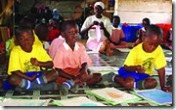
Hassan Tourabi Bweyogerere Nursery school is one of the many schools operating under the Madrasa model.
The school is located out of the city centre in an area with a typical village setting. Damilie Iryeng, a parent of the school, says her son used to be shy and was quiet. But a few months after taking him to the school, he became one of the most talkative children.
The programme has gone a long way in addressing the challenges of Universal Primary Education (UPE). Although UPE has greatly improved the literacy levels among children, pre-primary education remains a big problem.
According to Shafiq Ssekalala, the project director of Madrasa Resource Centre, children from marginalised communities joining P.1 are usually not well-prepared. “As a result, they take long to cope. This is the gap that Madrasa is trying to bridge,” Ssekalala explains.
Madrasa is currently operating in 53 communities in Kampala, Wakiso and Mityana. The programme is a brainchild of the Aga Khan.
Over 9,000 pupils have benefited from this programme.
The Madrasa pre-school programme originated from Kenya in 1986. It has increased access and retention in basic education for children from marginalised communities.
It has improved children’s wellbeing through ensuring a child-friendly and supportive household and a pre-school environment in their early developmental years.
The programme emphasises parental and community involvement and ownership to expose children to quality early childhood education. Madrasa pre-schools are set up with an open learning concept in mind.
Classrooms have different areas that children can explore such as the home, shop, block, clinic, book, sand and water areas.
The outdoor environment consists of out-door equipment contributed and built by the community.
For a community to benefit from the Madrasa programme, it is identified, then a development officer from the Madrasa Resource Centre is sent there to assist and support those who have expressed interest in opening a pre-school.
Madrasa staff and community members participate in discussions covering issues such as the benefits of education for children and childhood development.
Madrasa sets out the terms of the partnership and how the resource centre will help the community set up and manage the school.

 Ismailimail